3D Printing
SLA 3D Printing Services — Clear & Tough Resin Parts in 24 Hours
Optically clear walls, fine detail and the smoothest printed surface available, on a 400+ printer platform. Accuracy ±0.05 mm, first parts next working day.
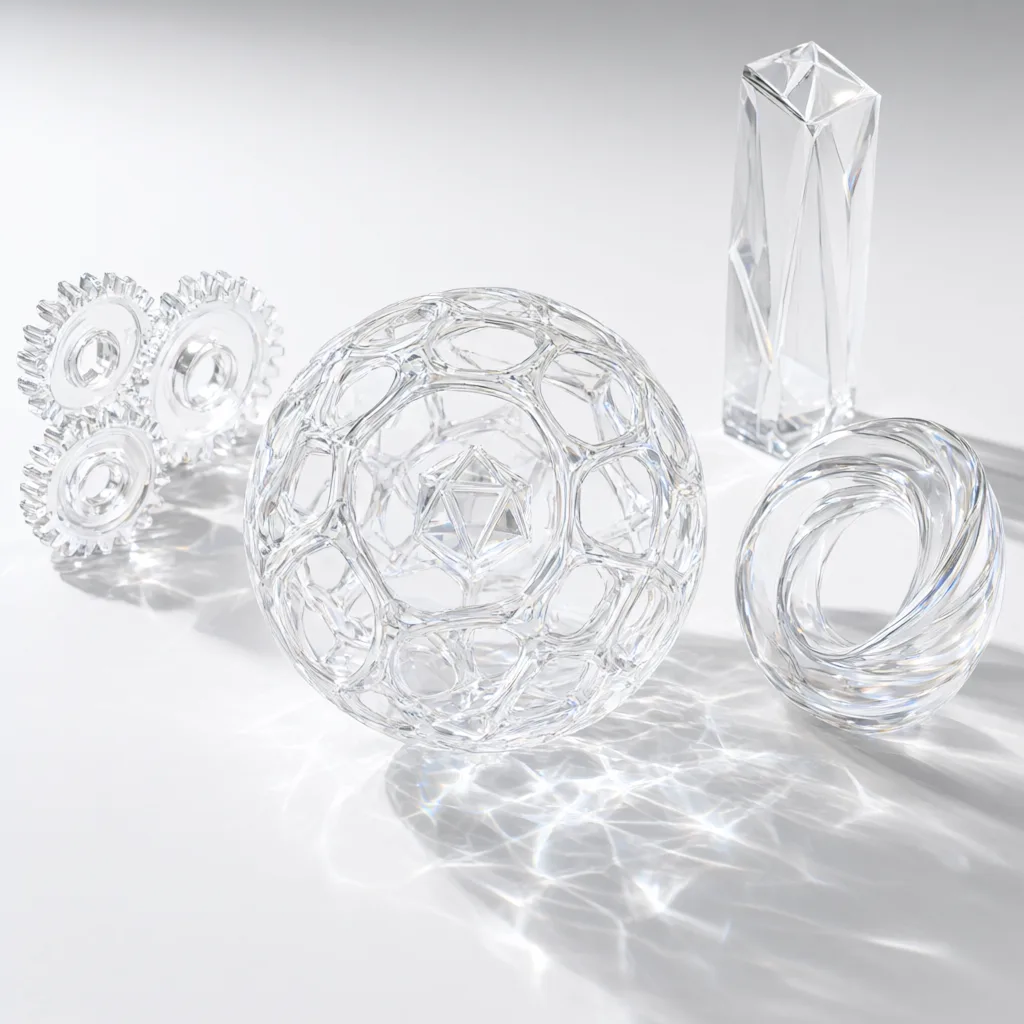
SLA resin printing is the clarity champion. A laser cures liquid photopolymer layer by layer at 25–100 μm, producing parts with optically clear walls, fine text, thin living detail and the smoothest as-printed surface of any print process. On MOMAKING's platform, standard resin, tough resin, high-temperature resin and clear resin run 24 hours a day — first parts typically ship the next working day.
What Buyers Order in Resin
- Visual masters and cosmetic prototypes: product shells that sand, prime and paint like injection-molded ABS for stakeholder sign-off.
- Clear fluidic parts: manifolds, microfluidic chips, impeller housings and window inserts where you need to watch the flow.
- Fit and assembly checks: snap-fit enclosures and bezels with true dimensions at ±0.05 mm on small geometry.
- Pattern and tooling work: sanding patterns, vacuum-form masters, and silicone-mold masters for low-run casting.
- Short-run end-use: batches of clips, covers and jigs in tough resin where a mold is not justified below a few thousand units.
Resin Family and Properties
Standard resin wins detail and clarity; tough resin (ABS-like) survives drops and flexes without shattering; high-temp resin holds shape approaching 200 °C for airflow and hot-gas fixtures; clear resin polishes to optical windows. All resins share a caution: long UV exposure and outdoor sun yellow and embrittle them — for outdoor parts we steer you to coated builds or nylon instead, and say so before printing.
Wall minimums start at 0.8 mm; drain holes are added to enclosed hollows automatically during our prep (trapped resin is the classic SLA failure nobody talks about). Oversized parts split and re-bond on the datum surfaces you specify.
Accuracy, Surface and Post-Processing
Typical accuracy is ±0.05 mm plus 0.5% of dimension on small-to-medium parts — bore diameters shrink slightly from cure shrinkage, so critical holes get printed undersized and corrected, or finished on the CNC bench next door. Surface as-printed runs Ra 3–6 μm; polishing, priming, painting and vapor smoothing take it from layered to glass.
Lead Time and Cost Logic
Quote confirmation to ship: 24 hours is standard for parts under the machine envelope; today's queue prints tonight. Resin price is driven by displaced volume and part orientation on the build platform, not by part count alone — ten small parts nested on one platform can cost less than one large one. Send STEP when you have it: our prep re-orients for strength along the load path and nests with other parts of the same resin to cut your per-part price.
Files, Prep and Checks
STL, OBJ, 3MF or STEP all land fine; STEP lets us re-mesh at optimal pitch rather than inheriting your tessellation. Every build gets a watertightness check, wall-thickness audit and drain-hole pass before laser touches resin. Dimensional reports ship with batch orders, photos before dispatch, and DHL/FedEx reaches most destinations in 3–5 days. Questions? [email protected] or WhatsApp +1 315-623-3808.
Frequently Asked Questions
How big can SLA parts be?
Is clear resin really optically clear?
Why did my resin part crack in the sun?
Can you print threads?
Resin Chemistry for Buyers: What “Tough,” “High-Temp” and Clear Actually Change
Photopolymer resins are acrylate or epoxy monomers crosslinked by light; the datasheet adjectives are chemistry in disguise. Standard acrylate resins cure fast and detail finely but finish as a rigid, brittle network — fine for visual masters, treacherous in thin snap walls. Tough (ABS-like) resins add long-chain flexibilizers and rubber phases: the fracture surface whitens and yields rather than cracking glass-clean, and thin walls survive assembly screw torque. High-temp resins push crosslink density (often cationic epoxy chemistry) so the glass-transition temperature sits above 150–200 °C rather than 50–60–which is the difference between a hot-air-duct master that holds shape and one that becomes modern art. Clear resins trade additive loading for transparency; after cure they transmit light diffusely, and polish + penetrating seal shifts them toward true optical clarity. The practical translation for your quote: the material line item is also a lead-time and post-processing statement — tough resins want longer post-cure, high-temp wants extended thermal post-cure, clear wants polishing labor you may or may not want to buy.
The Post-Processing Chain (and Why 24 Hours Is Honest and “Tonight” Is Not)
An SLA part off the platform is a chemistry experiment paused mid-sentence. The chain: drain and air-blow the internal channels (trapped green resin sags parts overnight), wash in solvent to stop the reaction at the surface, dry the solvent completely, then post-cure under UV and warmth to hit final conversion — skip the dry and you bleach a milky haze into clear parts; under-cure and the part bends at 45 °C in a parked car. After that come the mechanical steps: support removal planning happened at orientation time, but sanding, vapor-smoothing and paint are purchased finish tiers. All of this fits inside a working day, which is why next-day ship is real; same-day promises skip cure and sell you a part that is still changing shape in your mailbox. We schedule the full chain every build and quote finish tiers separately, so the clear window you receive is optically clear because you bought the three extra hours of labor — not because of luck.
Dimensional hygiene worth knowing: resin shrinks 2–6% linearly on cure; the machine's compensation matrix absorbs most of it, but you design for it — avoid 200 mm unsupported flats when you need flatness, and when a bore must hold H7, specify it and we print for a finishing cut. For assemblies, print mating parts from the same resin batch and the same tank history: shrinkage lot-to-lot is small but real, and a 20-part snap assembly from one tank fits like molded plastic.
When Clear Means Optical: Windows, Fluidics and the Polish Ladder
“Clear” is a spectrum with four priced rungs. As-printed clear reads frosted-translucent (light scatters off the layer steps). A fine bead-blast or wash-then-seal evens it to uniform frost — often exactly what diffusers and sight glasses want. Polishing (grit ladder 600→3000 then compound) lands near-glass with occasional flow-line ghosts visible at an angle. Vapor-smoothing fuses the surface skin to near-optical in one controlled bath — faster than hand polish, slightly softening fine detail. For microfluidic chips, the real engineering is the bond: solvent-vapor welded covers seal channels without the glue-line haze of epoxies, and channel floor finish downstream of the inlet matters more than the top face anyone inspects. Tell us which rung your application needs — diffuser frost is cheaper than optical glass and ships sooner; the quote prices the ladder so you stop paying for clarity your design never uses.
One honesty line about clarity: printed clear parts yellow slowly under UV like all acrylates; outdoor clear is a coated-and-painted conversation, or nylon, and the quote says which before you order — not in month eight.
Get this part priced
Upload your STEP file - AI quote in seconds, engineer-verified quote within 24 hours.